- Travel
-
Exhibits
- Mujeres, Cuban Women Making Cuban Art
- José Fuster
- La Portada Cubana
- Immortal Cuba: Artists Take on Their Heroes
- Seattle Poster Exhibit
- Sandra Dooley & Alejandrina Cué
- The Art of Wayacón
- Cuban Folk Art
- Cuba In Black And White
- 25 Years of Cuban Art Space
- Summer Folk Art Expo
- ¡SPRING AWAKENING FROM CUBA!
- Celebrating The Art Of Cuban Women
- Celebrating Paper, Affordable Art from Cuba
- Art of the Revolution
- Outsider Art
- Lost and Found
- En la lucha: Celebrating Cuban Women and Their Art
- Cuban Art Stash
- 100 Fires: 5 Cienfuegos Artists' Work on Paper
- Waya + Monte! Magic Realism in Cienfuegos
- Viva Cuba Viva! Poster Show
- Cultivando Sueños
- Black Lives Matter in Cuba Jan 9-March 27
- Leandro Soto: Crónicas visuales
- Cuban Canvas
-
Archive
- Global Reflection 2018: Spirit and Community
- Exhibit in the cloud: Contemporary Works on Paper
- MADE IN CUBA! MINNEAPOLIS EXHIBIT
- Cuban Posters and Photography from CCS collection
- AUTUMN SALE! Sept/Oct 2017
- SPRING ARTS AND CRAFT SALE
- Vuelo Directo/Non Stop: Alberto & Alejandro Lescay
- The Many Faces of Fidel
- Somos
- Made in Cuba!
- The US empire in Cuban graphics
- Made in Cuba/Seattle exhibit
- Entre Nos
- Looking Back
- Cuban Art Space
- Membership/Donate
- About Us
- Cuba News

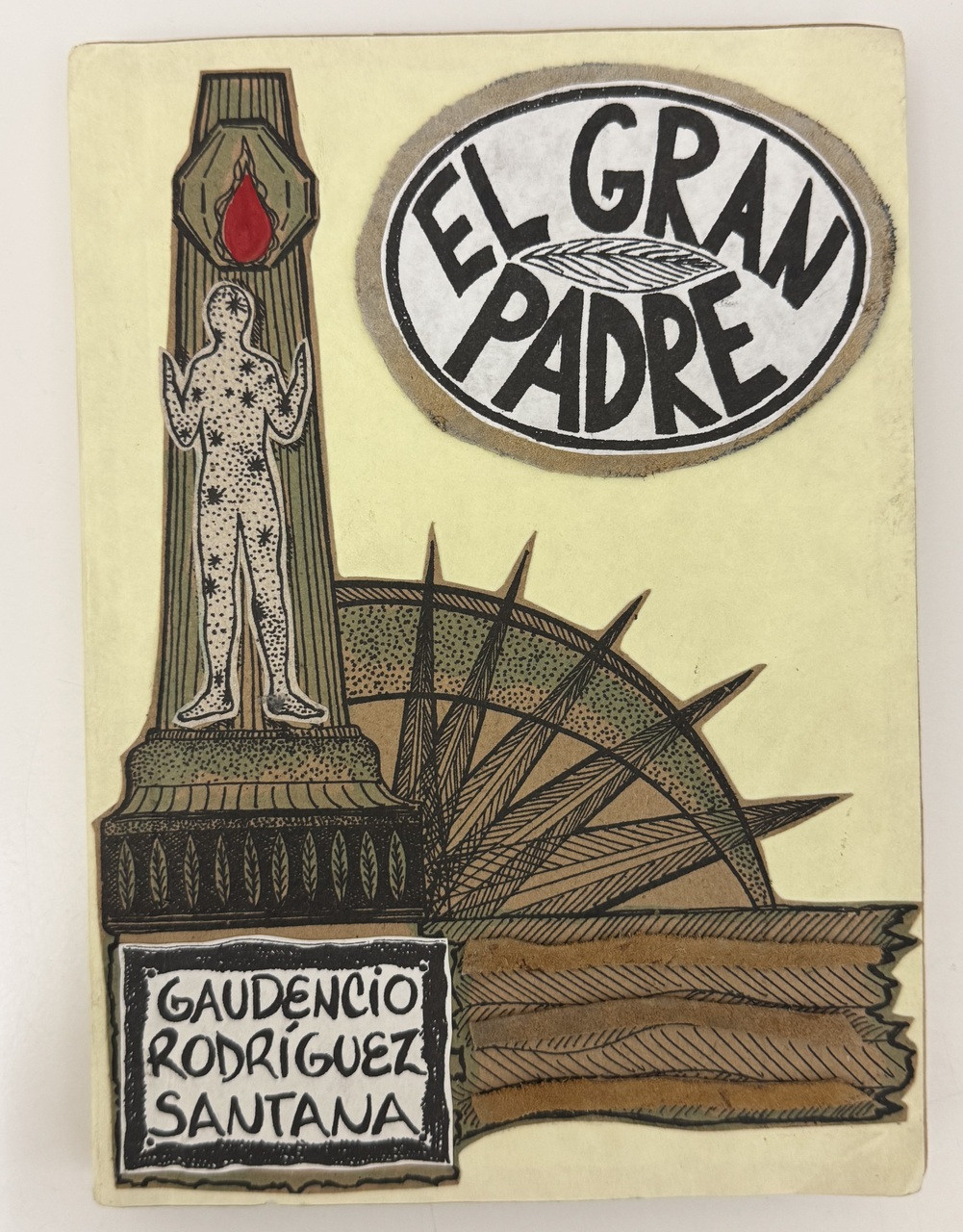
, "El Gran Padre," c. early 1990s. Handmade artist book, Colección del San Juan series., $125.00 (http://centerforcubanstudies.org/ediciones-vigia-cover-design-and-illustration-ivet-baez-andux-author-gaudencio-rodriguez-santana-el-gran-padre-c-early-1990s-handmade-artist-book-coleccion-del-san-juan-series/))
-
Ivet Báez Andux's cover design creates a powerful symbolic composition celebrating Cuban patriotism and agricultural heritage. The hand-colored illustration features a monumental column topped with a standing figure holding a red eternal flame overhead—a clear reference to Cuban revolutionary martyrdom and the monuments that dot the island's landscape honoring fallen heroes. At the base of the column, stylized wheat sheaves radiate outward in meticulously cross-hatched pen work, symbolizing abundance, sustenance, and the dignity of agricultural labor central to Cuban identity. An oil lamp with an orange flame reinforces themes of illumination, knowledge, and keeping memory alive. The "EL GRAN PADRE" logo appears in an oval cartouche adorned with wheat stalks, while the author's name is presented in a hand-drawn rectangular frame at the bottom.
The book opens with an epigraph from Chilean poet Luis Cernuda reflecting on the "sad fate" of being born with an "illustrious gift" in a place where people only know "insult, mockery, and deep suspicion" toward those who illuminate their words with "hidden original fire"—a meditation on the poet's lonely calling. The publication belongs to Ediciones Vigía's Colección del San Juan series, marked by the publisher's distinctive colophon showing a classical column, wheat sheaves, and an oil lamp. The dedication page reveals the personal nature of this work: "to my son David, to friends both secret and open, to Yanira, because I was a friend of her Great Father."
Gaudencio Rodríguez Santana, born in Perico, Matanzas in 1969, represents a younger generation of Cuban poets and editors working within the Vigía tradition. He published "De cabeza sobre el mundo" and "Glosa (Tres Sonetos de Pedro Salinas)" with Ediciones Vigía, and Ediciones Matanzas published his works "Teatros Vacíos," "Accidentes," and "vio la luz" through Ediciones Aldabón. As a member of the Asociación Hermanos Saíz and the editorial board of Revista Matanzas, Rodríguez Santana's texts appeared in Cuban and international periodicals and anthologies. This handmade volume, with its rough kraft paper pages and hand-drawn illustrations, embodies Vigía's ethos of creating beautiful literary objects despite material scarcity, transforming poetry into a tactile, visual experience.
-
-
Discover More at the Center for Cuban Studies