- Travel
-
Exhibits
- Mujeres, Cuban Women Making Cuban Art
- José Fuster
- La Portada Cubana
- Immortal Cuba: Artists Take on Their Heroes
- Seattle Poster Exhibit
- Sandra Dooley & Alejandrina Cué
- The Art of Wayacón
- Cuban Folk Art
- Cuba In Black And White
- 25 Years of Cuban Art Space
- Summer Folk Art Expo
- ¡SPRING AWAKENING FROM CUBA!
- Celebrating The Art Of Cuban Women
- Celebrating Paper, Affordable Art from Cuba
- Art of the Revolution
- Outsider Art
- Lost and Found
- En la lucha: Celebrating Cuban Women and Their Art
- Cuban Art Stash
- 100 Fires: 5 Cienfuegos Artists' Work on Paper
- Waya + Monte! Magic Realism in Cienfuegos
- Viva Cuba Viva! Poster Show
- Cultivando Sueños
- Black Lives Matter in Cuba Jan 9-March 27
- Leandro Soto: Crónicas visuales
- Cuban Canvas
-
Archive
- Global Reflection 2018: Spirit and Community
- Exhibit in the cloud: Contemporary Works on Paper
- MADE IN CUBA! MINNEAPOLIS EXHIBIT
- Cuban Posters and Photography from CCS collection
- AUTUMN SALE! Sept/Oct 2017
- SPRING ARTS AND CRAFT SALE
- Vuelo Directo/Non Stop: Alberto & Alejandro Lescay
- The Many Faces of Fidel
- Somos
- Made in Cuba!
- The US empire in Cuban graphics
- Made in Cuba/Seattle exhibit
- Entre Nos
- Looking Back
- Cuban Art Space
- Membership/Donate
- About Us
- Cuba News

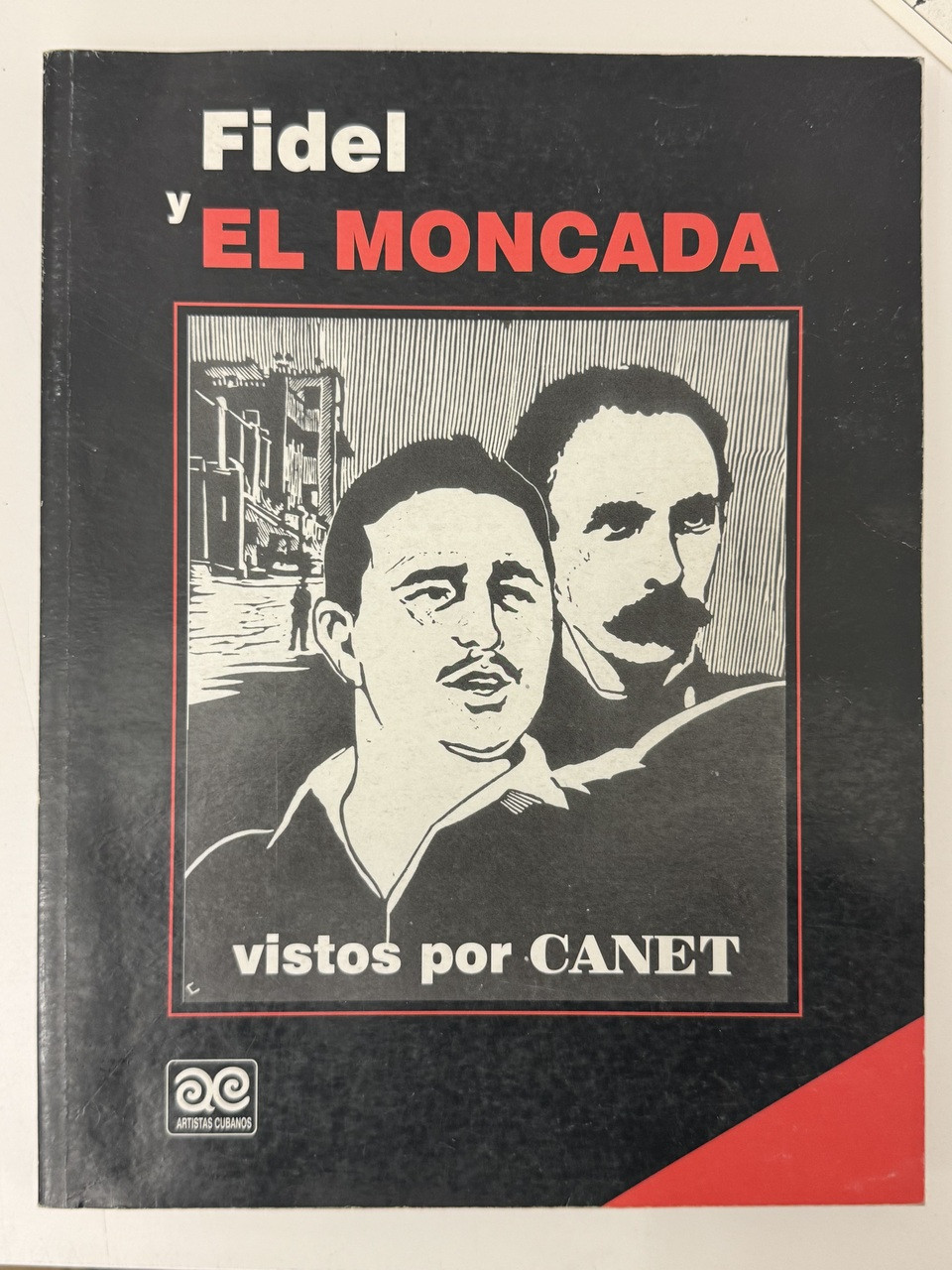
, "Fidel y el Moncada vistos por Canet," 2003. , $125.00 (http://centerforcubanstudies.org/editorial-letras-cubanas-cover-artist-and-illustrator-antonio-canet-hernandez-introduction-marta-rojas-editor-iraida-sanchez-oliva-artistic-direction-and-design-alfredo-montoto-sanchez-fidel-y-el-moncada-vistos-por-canet-2003/))
-
"Fidel y el Moncada vistos por Canet" (Fidel and the Moncada as seen by Canet) is a special commemorative edition published by Editorial Letras Cubanas in 2003 to mark the 50th anniversary of the assault on the Moncada Barracks on July 26, 1953, in Santiago de Cuba—the pivotal event that launched the Cuban Revolution. The book contains a series of linocut prints (ninety-five linoleos plus five woodcuts) by master printmaker Antonio Canet Hernández, originally conceived for an exhibition but later enriched to become both artistic creation and historical document.
Antonio Canet Hernández (born Casa Blanca, La Habana, 1942) is one of Cuba's most prolific printmakers. He began working in printmaking in 1959 with the triumph of the Revolution and served as head of the Plastic Arts Department of the Ministry of the Revolutionary Armed Forces. A founding member of UNEAC (Unión Nacional de Escritores y Artistas de Cuba), member of UNESCO's International Association of Plastic Artists, and member of the Asociación de Grabadores de Cuba founded by painter Carmelo González, Canet has exhibited extensively nationally and internationally. He graduated from the Escuela Nacional de Bellas Artes San Alejandro between 1962 and 1964, working on murals alongside Chilean painter José Venturelli and Orlando Suárez, forming part of the group of artists who founded the Taller Experimental de Gráfica de La Habana in 1962 to revalue the technique of lithographic printmaking. His acclaimed series "Cecilia Valdés" (200 pieces and 50 vignettes in linocut and woodcut techniques) was published by Editorial Letras Cubanas in 1983 and won the Gran Premio en Diseño e Ilustración at the IV National Book Art Competition. Harvard University reproduced twenty of these prints in the volume "Proceed with Caution, When Engaged by Minority Writing in the Americas" by writer Doris Soomer.
The cover design is a powerful example of revolutionary graphic art—a high-contrast black and white portrait showing two figures (representing heroic young combatants from the assault) rendered in bold, simplified forms characteristic of linocut printmaking. The word "EL MONCADA" blazes across the top in red letterforms, creating immediate visual impact. The composition uses the dramatic contrast inherent to relief printing to suggest both the stark moral clarity of revolutionary action and the historical shadows of clandestine struggle. A red diagonal slash cuts across the lower corner, evoking both the urgency of revolutionary violence and the blood sacrificed in the assault. The back cover text includes commentary by painter and printmaker Lesbia Vent Dumois and historian and editor Pedro Álvarez Tabío.
Canet's work summarizes this fundamental segment of Cuban historical memory, organizing it chronologically: the years before the Moncada, the mediatized and turbulent republic, Fulgencio Batista's coup d'état, Fidel's immediate response in 1953 (the centenary year of José Martí's birth), and the assault on the Moncada Barracks itself. The book includes the expedition of the Granma (1956), the insurrectional struggle in the Sierra Maestra, and transcendent aspects of the revolutionary transformation. The prints document not just the heroic young combatants who participated in the assault but also the monstrous crimes committed by the Batista tyranny. Canet's "graphic reading" of Fidel Castro's defense speech "La historia me absolverá" (History Will Absolve Me) becomes a visual interpretation of Cuban revolutionary history.
-
-
Discover More at the Center for Cuban Studies