- Travel
-
Exhibits
- Mujeres, Cuban Women Making Cuban Art
- José Fuster
- La Portada Cubana
- Immortal Cuba: Artists Take on Their Heroes
- Seattle Poster Exhibit
- Sandra Dooley & Alejandrina Cué
- The Art of Wayacón
- Cuban Folk Art
- Cuba In Black And White
- 25 Years of Cuban Art Space
- Summer Folk Art Expo
- ¡SPRING AWAKENING FROM CUBA!
- Celebrating The Art Of Cuban Women
- Celebrating Paper, Affordable Art from Cuba
- Art of the Revolution
- Outsider Art
- Lost and Found
- En la lucha: Celebrating Cuban Women and Their Art
- Cuban Art Stash
- 100 Fires: 5 Cienfuegos Artists' Work on Paper
- Waya + Monte! Magic Realism in Cienfuegos
- Viva Cuba Viva! Poster Show
- Cultivando Sueños
- Black Lives Matter in Cuba Jan 9-March 27
- Leandro Soto: Crónicas visuales
- Cuban Canvas
-
Archive
- Global Reflection 2018: Spirit and Community
- Exhibit in the cloud: Contemporary Works on Paper
- MADE IN CUBA! MINNEAPOLIS EXHIBIT
- Cuban Posters and Photography from CCS collection
- AUTUMN SALE! Sept/Oct 2017
- SPRING ARTS AND CRAFT SALE
- Vuelo Directo/Non Stop: Alberto & Alejandro Lescay
- The Many Faces of Fidel
- Somos
- Made in Cuba!
- The US empire in Cuban graphics
- Made in Cuba/Seattle exhibit
- Entre Nos
- Looking Back
- Cuban Art Space
- Membership/Donate
- About Us
- Cuba News

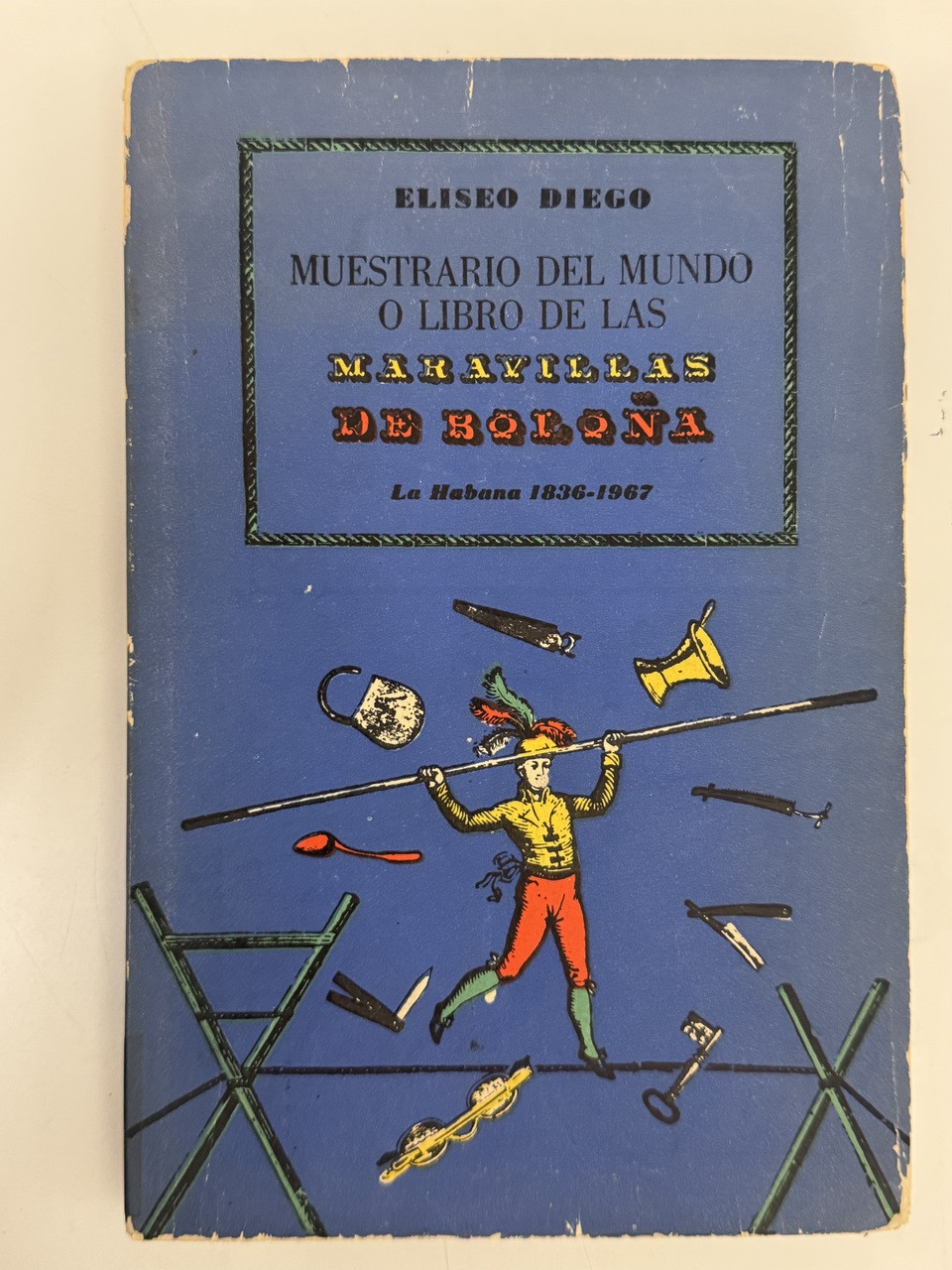
, "Muestrario del mundo o libro de las maravillas de Boloña," May 1969., $50.00 (http://centerforcubanstudies.org/union-de-escritores-y-artistas-de-cuba-uneac-contemporaneos-series-cover-designer-fayad-jamis-interior-design-eliseo-diego-assisted-by-fayad-jamis-author-eliseo-diego-muestrario-del-mundo-o-libro-de-las-maravillas-de-bolona-may-1969/))
-
The cover of "Muestrario del mundo o libro de las maravillas de Boloña" (Sample of the World or Book of the Marvels of Bologna) presents a whimsical circus performer balancing on a tightrope against a vibrant blue background, surrounded by an array of performance equipment including balancing poles, geometric apparatus, and circus paraphernalia. Fayad Jamís's design transforms the book into a visual cabinet of curiosities, evoking both 19th-century fairground aesthetics and the wonder-filled world of traveling entertainments. The playful illustration style, with its detailed line work and bright colors, perfectly captures the book's exploration of marvels and curiosities spanning from 1836 to 1967 Havana. The back cover features an elegant hot air balloon illustration, reinforcing themes of flight, wonder, and imaginative exploration that permeate Diego's poetic vision.
This second edition of 3,000 copies was published as part of the distinguished "Contemporáneos" series in 1969 during the "Año del Esfuerzo Decisivo." The work serves as both an "Introduction and Homage to Don José Severino Boloña," celebrating a figure whose identity bridges historical and imaginative realms. Diego designed the interior pages himself, assisted by Fayad Jamís, creating a unique bibliographic object that blurs the boundaries between poetry book and visual art project. The collaboration involved linotype operators Eduardo González and Francisco González and typesetters José Ramón Marsella and Carlos Rosas from Production Unit 08 "Mario Reguera Gómez" of the Instituto del Libro, demonstrating the collective artisanal approach to revolutionary book production.
Eliseo Diego (1920-1994) was born in Havana and traveled extensively as a child through the United States and parts of Europe. He recently returned from visits to the Soviet Union and other socialist countries before this publication. Beginning his literary career in the 1940s with contributions to the influential Orígenes magazine, Diego had published "En las oscuras manos del olvido" (1942), "Divertimentos" (1946), "En la Calzada de Jesús del Monte" (1949), "Por los extraños pueblos" (1958), "El oscuro esplendor" (1966), and "Versiones" (1967) by the time this work appeared. A meticulous student of English-language literature, detective fiction, and children's stories, Diego brought a cosmopolitan sensibility to Cuban poetry while remaining deeply rooted in Havana's urban landscape and cultural memory.
-
-
Discover More at the Center for Cuban Studies
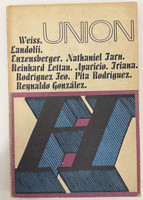
![Unión de Escritores y Artistas de Cuba / UNEAC - Contemporáneos series (cover designer: Cecilia Guerra, design: Darío Mora, author: Eliseo Diego), "Versiones," [1960s]. Offset print, book.](https://cdn10.bigcommerce.com/s-ufzvo/products/5897/images/6480/IMG_9365__71401.1761520962.200.200.jpg?c=2)